Sod is sold by area, not volume, so you only need square feet. Measure the lawn, add a little for trimming, and divide by the size of the piece you are buying. A 40 × 25 ft lawn is 1,000 sq ft: 376 slabs of 2.66 sq ft, 100 rolls of 10 sq ft, or 2 to 3 pallets. HomeGuide puts sod with delivery at $0.50 to $1.00 per sq ft, so that lawn costs about $500 to $1,000 if you lay it yourself and $1,000 to $2,000 installed.
How much sod do I need?
- Measure the lawn in feet. Split it into rectangles, circles and triangles, and leave out beds, patios and the driveway.
- Add extra for cuts and waste. Mississippi State University Extension suggests buying about 5% more than you measure; Sod Solutions suggests 5 to 10%. Curved edges use more.
- Divide by the piece size and round up: 2.66 sq ft per slab, 10 sq ft per large roll, 450 to 500 sq ft per pallet.
With 5% added, the same 1,000 sq ft lawn becomes 1,050 sq ft: 395 slabs, 105 rolls or 3 pallets.
How much does a pallet of sod cover?
Most pallets carry 450 to 500 sq ft, according to MSU. Sod Solutions describes slab pallets of about 400, 450 or 500 sq ft, and pallets of large rolls at 500, 600 or 700 sq ft. By our arithmetic, a 450 sq ft pallet of slabs holds about 169 pieces. The size varies by farm and region, so ask what one pallet covers before you count. The calculator shows a range from 450 to 500.
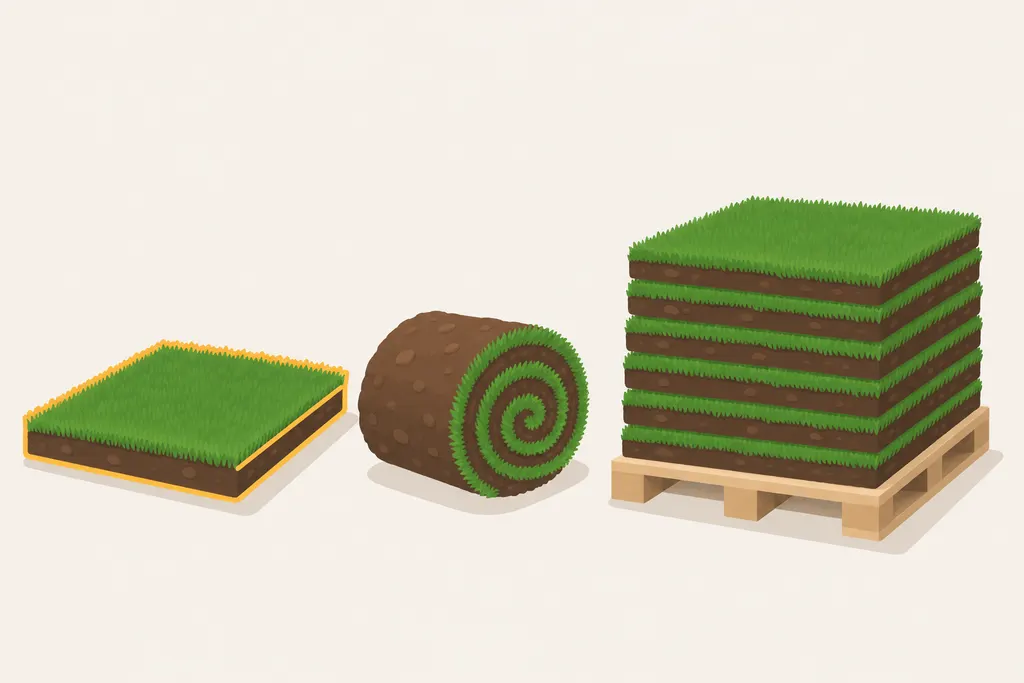
Slabs measure 16 × 24 in, or 2.66 sq ft each (Sod Solutions). They are the common format in the South. A 1,000 sq ft lawn takes 376 slabs. They are small enough to carry one or two at a time and easy to fit around curves.
Rolls come in two sizes in Sod Solutions’ guide: mini rolls of 40 × 18 in (5 sq ft) and large rolls of 60 × 24 or 80 × 18 in (10 sq ft). The calculator counts 10 sq ft rolls; for 1,000 sq ft that is 100 rolls, or 200 of the mini size. LawnStarter prices 2 × 5 ft rolls at $4 to $7.50 each.
Pallets are how most sod is sold and delivered. LawnStarter lists $150 to $450 for a pallet of 450 to 500 sq ft. MSU warns that a 450 sq ft pallet may weigh as much as a ton, and Sod Solutions gives 1,500 to 3,000 lb depending on moisture and grass, up to 50% more when wet.
Sod cost per square foot and installed
The two cost guides we used agree on the broad picture but split the bill differently. HomeGuide folds delivery into its sod price. LawnStarter quotes sod and delivery separately, so its figures look lower until the truck fee is added.
| What you pay for | HomeGuide | LawnStarter |
|---|---|---|
| Sod, per sq ft | $0.50–$1.00 with delivery | about $0.60 |
| Labor, per sq ft | $0.50–$1.00 | – |
| Installed, per sq ft | $1–$2 | about $1.65 |
| Pallet (450–500 sq ft) | – | $150–$450 |
| 2 × 5 ft roll | – | $4–$7.50 |
| Delivery | included above | $65–$230 |
LawnStarter’s single figures sit inside HomeGuide’s ranges. Its pallet price works out to $0.30 to $1.00 per sq ft. On a small job the separate delivery fee matters: 500 sq ft at $0.60 is $300, and delivery adds $65 to $230 on top. The calculator uses HomeGuide’s $0.50 to $1.00 for sod and $1 to $2 installed, and shows LawnStarter’s pallet, roll and delivery prices beside them.
Price by grass type
HomeGuide also lists sod price by grass. These start below its delivered range, so they appear to cover the sod alone; ask whether a quote includes delivery. The last column is our arithmetic.
| Grass | Per sq ft | Per 1,000 sq ft |
|---|---|---|
| Kentucky bluegrass | $0.30–$0.55 | $300–$550 |
| Fescue | $0.35–$0.70 | $350–$700 |
| St. Augustine | $0.30–$0.80 | $300–$800 |
| Zoysia | $0.28–$0.80 | $280–$800 |
| Bermuda | $0.30–$0.85 | $300–$850 |
| Centipede | $0.35–$0.90 | $350–$900 |
Sod installation cost by lawn size
HomeGuide’s installed prices by lawn size, with the pallet and slab counts for the same area (our arithmetic, no extra added). It gives $2,000 as the average job and $1,000 to $3,000 as the typical span.
| Lawn size (sq ft) | Installed cost | Pallets (450–500 sq ft) | Slabs |
|---|---|---|---|
| 500 | $500–$1,000 | 1–2 | 188 |
| 1,000 | $1,000–$2,000 | 2–3 | 376 |
| 2,000 | $2,000–$4,000 | 4–5 | 752 |
| 5,000 | $5,000–$10,000 | 10–12 | 1,880 |
| 10,890 (quarter acre) | $11,000–$22,000 | 22–25 | 4,094 |
Picking up sod yourself: weight and timing
A pallet is heavy. At up to a ton (MSU) or 1,500 to 3,000 lb (Sod Solutions), one pallet can match or pass the payload of a half-ton pickup: the maximum payloads Ford lists for the 2026 F-150 run from 1,405 to 2,440 lb. The calculator divides your payload by 2,000 lb to count whole pallets per trip; below 2,000 lb it tells you a pallet is too heavy and points you to delivery. Wet sod can weigh more than 2,000 lb, so leave a margin. MSU advises an adequate vehicle or trailer, a tarp and ratchet straps.
Timing matters as much as weight. MSU notes that fresh-cut sod has a short shelf life and should be laid promptly. If you cannot lay it the same day, keep the pallets in shade and lightly moist. Sod bought in winter keeps longer on the pallet than sod bought in summer.
Preparing soil before sod arrives
MSU’s advice is to finish site work before delivery, because the sod cannot wait for you. Its steps, in short:
- Clear construction debris, then kill the old turf and weeds and till them under.
- Test the soil (MSU says a test costs under $20) and lime if the pH is below 6.
- Work amendments into the top 6 to 10 in, where roots grow. To improve the top 3 in, MSU suggests mixing in 1 to 2 in of compost.
- Grade so water drains away from buildings and no low spots hold water.
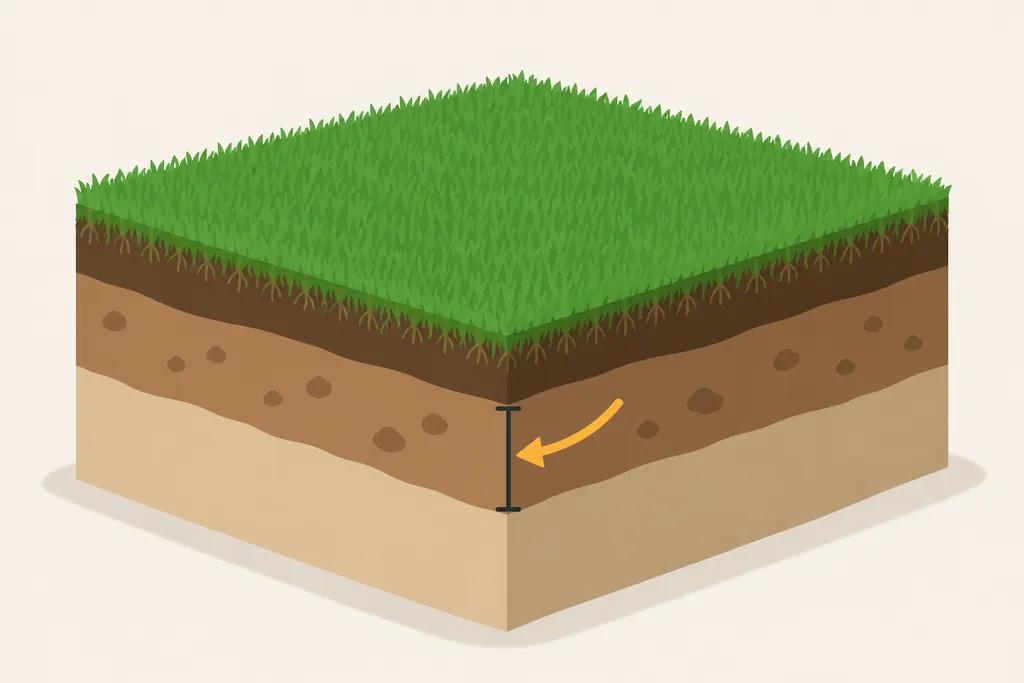
MSU also points out that sod is not sold with enough soil to live on for more than a few days, so the ground beneath does the real work. To size compost for that step, run 1 in over 1,000 sq ft (about 3.1 yd). To fill low spots or raise the grade, use the topsoil calculator.
Delivery and laying day checklist
- Soil prep, grading and debris removal finished before the truck arrives
- Delivery time confirmed and a shady spot picked for the pallets
- Hose and sprinklers set out so you can water as you go
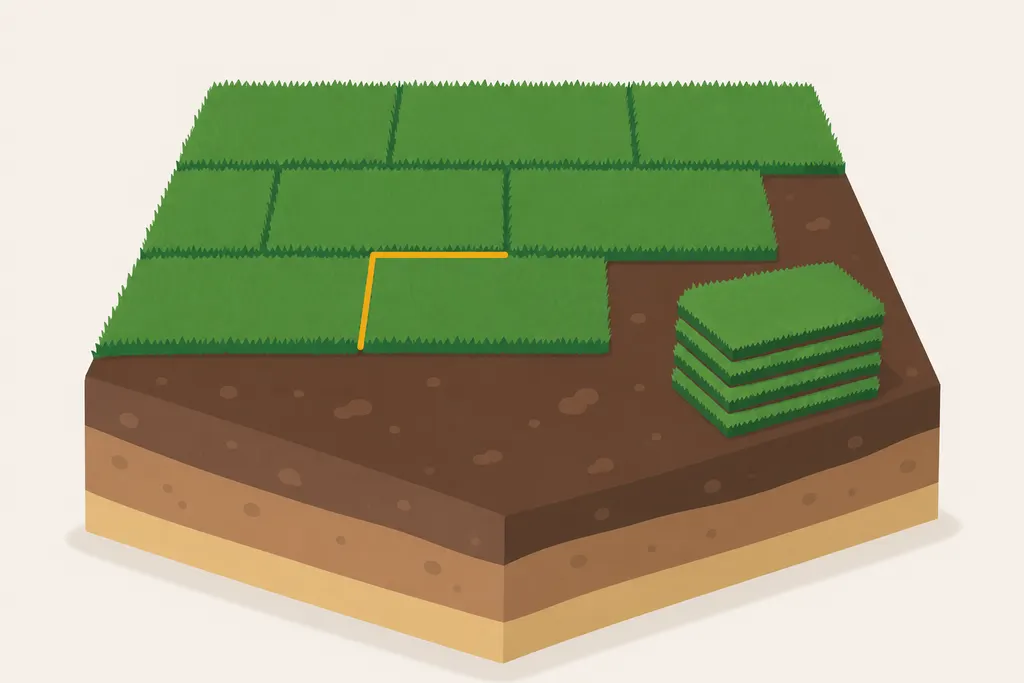
- First row laid along a straight edge such as a sidewalk or driveway
- Ends staggered like brickwork so seams do not line up
- On a slope, no seams running straight downhill
- Pieces pushed tight together, with trimming and edging left for last
- Each section watered right after it goes down
- Foot traffic kept off the soft, wet sod
MSU says to water immediately, especially in summer, and to keep the soil soft underfoot but not soggy during the first week. Its schedule then eases off over the following weeks.
Sod questions people ask
How much does a pallet of sod cover?
Usually 450 to 500 sq ft (MSU). Sod Solutions lists slab pallets at about 400, 450 or 500 sq ft and large-roll pallets at 500 to 700 sq ft. Ask the farm or store for its exact figure.
How much does a pallet of sod weigh?
MSU says a 450 sq ft pallet may weigh as much as a ton. Sod Solutions gives 1,500 to 3,000 lb, and up to 50% more when the sod is wet.
How much is a pallet of sod?
LawnStarter lists $150 to $450 for a pallet of 450 to 500 sq ft, with delivery at $65 to $230 extra. Grass type drives most of the spread; see the grass table above.
How much extra sod should I order?
About 5% (MSU) to 10% (Sod Solutions). Lawns with many curves or beds to cut around sit at the high end. Use the “extra %” box in the calculator.
How long can sod sit on the pallet?
Not long. MSU says fresh-cut sod has a short shelf life and should go down promptly; keep it shaded and lightly moist if you are delayed. It keeps longer in winter than in summer.
Can I lay sod over existing grass?
MSU’s preparation starts by killing the existing turf and weeds and tilling them under, then improving the soil. Laying new sod on old grass skips the steps that let roots reach real soil.
Some drawings on LandscapeFill were made with an AI image tool. They are simplified sketches of yards and materials, not photos of real projects, products, places or people.
Sources 5
Checked and updated November 22, 2026