Compost goes on thin, so the yards add up slower than most people expect. At ¼ in, one cubic yard covers about 1,300 sq ft; at ½ in, about 650 sq ft. That is the range Oregon State University Extension gives for top-dressing an existing lawn. New planting beds take far more, because the same guide calls for 3–4 in of compost mixed into the top 6–8 in of soil. Enter your areas and depth above, and the calculator also gives the weight, which matters with compost because water can nearly double it.
How much compost for top-dressing a lawn
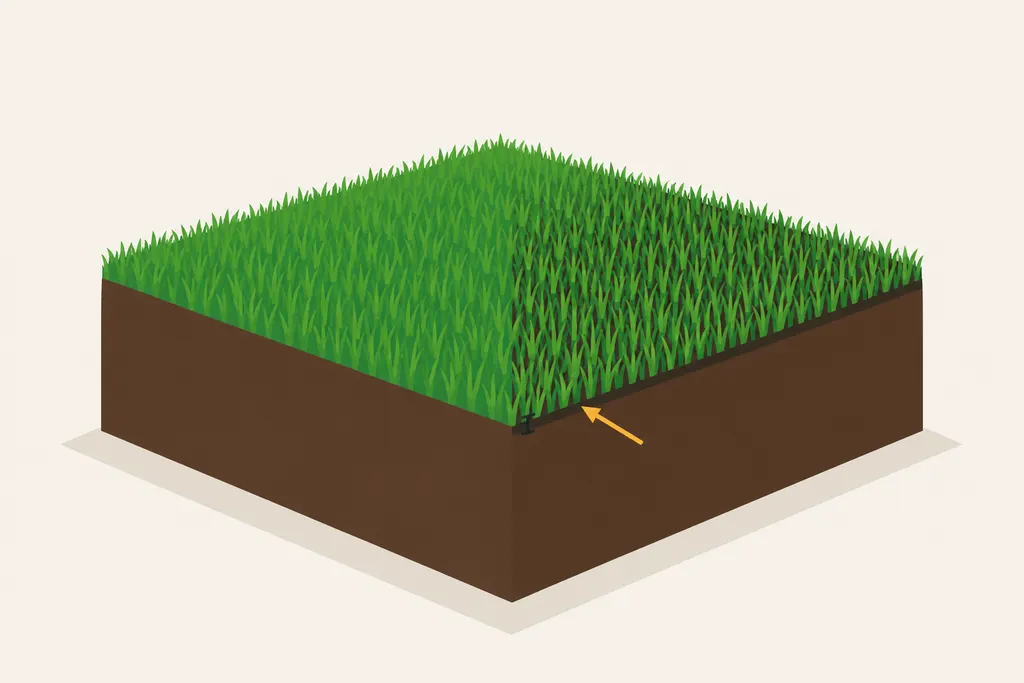
Oregon State’s guide (EM 9308) suggests ¼ to ½ in of compost spread over an existing lawn in late spring or early fall, when soil above 60°F lets the new seed sprout quickly. It pairs top-dressing with core aeration and overseeding: mow short, aerate, break up the plugs, spread the compost, then seed and keep it moist. Clemson’s lawn factsheet sets the upper limit at ½ in per application, since thicker layers can shade and stunt the grass, and it rates compost as suitable for any soil type.
| Lawn area (sq ft) | ¼ in (yd) | ½ in (yd) | 1 in (yd) | 2 in (yd) |
|---|---|---|---|---|
| 500 | 0.39 | 0.77 | 1.54 | 3.09 |
| 1000 | 0.77 | 1.54 | 3.09 | 6.17 |
| 2000 | 1.54 | 3.09 | 6.17 | 12.35 |
| 5000 | 3.86 | 7.72 | 15.43 | 30.86 |
The 1 and 2 in columns are for new lawns. Oregon State suggests working 1–2 in of compost into the soil while you prepare the ground, before seed or sod goes down.
How much compost to mix into planting beds
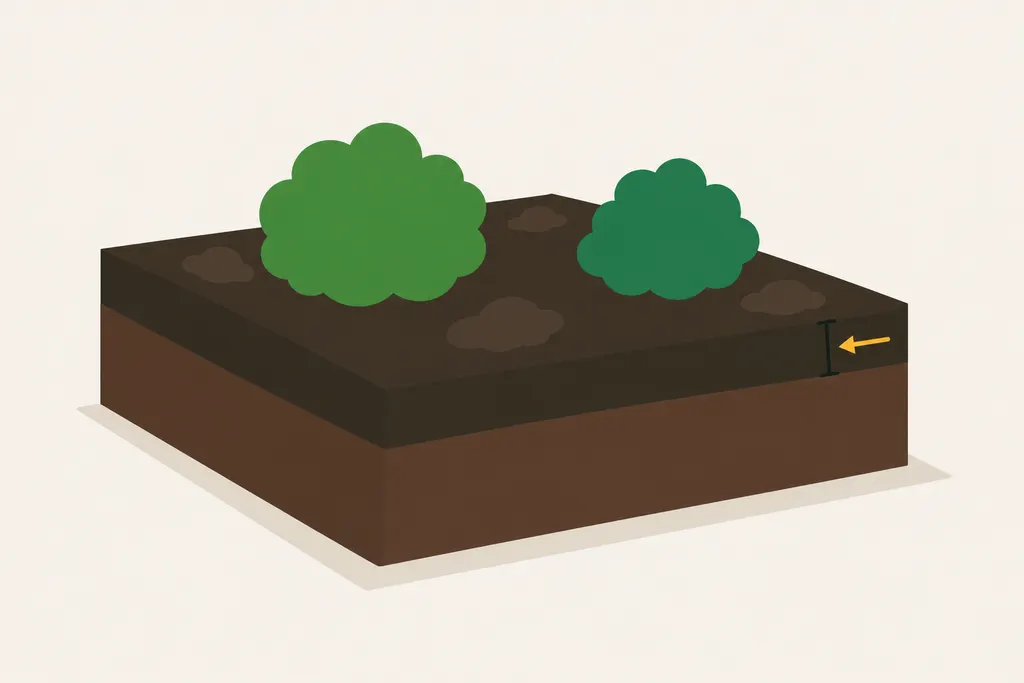
For a new ornamental bed, Oregon State’s rate is 3–4 in of compost spread over the area and dug or tilled into the top 6–8 in. A 20 × 5 ft shrub border at 3 in is 100 sq ft and needs 0.93 cubic yards; at 4 in, 1.23 yards.
Established shrub and perennial beds are different. The guide gives no compost depth for them; what it does recommend for beds is a woody mulch on the surface to hold water and keep weeds from sprouting. If that is your job, the mulch calculator covers depth and bag counts.
What are you putting compost on?
Plan on ¼–½ in, right after core aeration. Run 1,000 sq ft at ¼ in. A ½ in layer is the most Clemson suggests in one go.
Work 1–2 in into the soil before seeding or sodding. Run 1,000 sq ft at 2 in. If the ground itself is thin or rocky, start with the topsoil calculator, and count turf with the sod calculator.
Spread 3–4 in and mix it into the top 6–8 in. Run a 20 × 5 ft bed at 3 in.
Oregon State gives no compost depth here; its guide favors a woody mulch on bed surfaces. Switch the calculator to mulch or open the mulch calculator.
More is not better. Oregon State warns that heavy compost use can push extra phosphorus and potassium into surface water and groundwater, and can injure plants much like too much fertilizer.
Compost weight: why wet compost is heavier
Oregon State’s compost analysis guide (EM 9217) reports field bulk density anywhere from roughly 800 lb to past 1,600 lb a yard. Screened compost at 50% moisture is close to 1,000 lb, and very wet material can top 1,500 lb. Moisture is the big driver. Above about 60% compost turns clumpy and hard to spread; below about 40% it gets dusty.
For hauling, that means 0.4 to 0.8 tons a yard. Take a truck with 1,405 lb of payload, the lowest maximum Ford lists for the 2026 F-150. Once a 200 lb driver is counted, it can carry about 1.2 yards of compost at 1,000 lb a yard, and well under one yard of very wet material. Your own door-jamb label sets the real limit. Water also dilutes what you pay for: at 60% moisture, only 40% of the weight is dry matter.
Bagged vs bulk compost cost
Lawn Love lists bulk compost per cubic yard, before delivery:
| Compost type | Per cu yd |
|---|---|
| Organic compost | $20–$42 |
| Mushroom compost | $20–$40 |
| Leaf compost | $15–$30 |
Lawn Love puts delivery at $80–$170. Oregon State notes that mushroom and manure composts can run higher in soluble salts, which can harm seedlings and new lawn seed, so ask before using them on an overseeded lawn.
Bags make sense for a small bed or a few bare patches. The one bag price we have is from a single store and a premium brand: Patuxent Nursery sells Coast of Maine lobster compost at $14.99 for 1 cu ft. At 27 bags per yard that is about $405 a yard, roughly ten times the top of Lawn Love’s bulk range. Other brands and stores will price differently, but bags of any kind add up quickly over a whole lawn.
Reading a compost label or lab analysis
Bulk suppliers that test their product can share a lab report. EM 9217 explains the main lines:
| Test | Typical value | What it tells you |
|---|---|---|
| Moisture | 40–60% | Wetter is clumpy and heavy; drier is dusty |
| pH | 6–7.5 (plant-based), 7–8 (manure-based) | Manure composts do not suit acid-loving shrubs such as rhododendron |
| Organic matter | 25–65% | Below 25% often means soil or sand got mixed in; above 65% may not be fully composted |
| C:N ratio | 10–15 | Woody composts often exceed 20 and can tie up nitrogen |
| Total nitrogen | 1–2% (dry weight) | Below 1% may need extra fertilizer |
| Sodium | Below 0.6% | Higher can injure plants |
The guide treats C:N as a weak maturity test on its own. It suggests also looking at stability (respiration) and maturity ratings.
Questions to ask your supplier
- Is it screened, and to what size?
- What went into it: yard debris, manure, mushroom substrate, food scraps?
- Do you have a recent lab analysis with moisture, pH and salts?
- Has the feedstock been checked for persistent herbicides?
- Price per yard, delivery fee and minimum load?
- Can the truck reach a spot near the lawn or bed?
FAQ
How much compost do I need per 1,000 sq ft of lawn?
About 0.77 cubic yards at ¼ in and 1.54 at ½ in. That is the top-dressing range in Oregon State’s guide.
Can you put too much compost on a lawn?
Yes. Clemson keeps each pass to ½ in because thicker layers shade and stunt the grass, and Oregon State warns that excess compost can leach nutrients and burn plants.
How much does a yard of compost weigh?
Anywhere from about 800 lb to more than 1,600 lb, per Oregon State EM 9217. Screened compost at 50% moisture is near 1,000 lb.
How many 1 cu ft bags of compost make a yard?
- At the one premium bag price cited above, that comes to about $405 a yard.
When is the right time to top-dress a lawn with compost?
Oregon State suggests late spring or early fall, right after core aeration and before overseeding; seed sprouts quickly once the soil is above 60°F.
Is compost the same as topsoil?
No. Compost is mostly decomposed organic matter and goes on thin or gets mixed in. Topsoil is mineral soil used for depth. The topsoil calculator covers that side.
Some drawings on LandscapeFill were made with an AI image tool. They are simplified sketches of yards and materials, not photos of real projects, products, places or people.
Sources 6
Checked and updated November 22, 2026