Pea gravel is ordered in two layers for most paths: the rounded pea stone you walk on and a thinner bed of crushed rock under it. LawnStarter’s method calls for about 3 in of pea gravel on top of a 2 in crushed-rock layer, in a trench dug about 6 in deep and lined with landscape fabric. A 3 × 30 ft path is 90 sq ft, so it takes 0.83 cubic yards of pea gravel (about 45 bags of 0.5 cu ft) plus 0.56 yards of base. Run each layer as its own material in the calculator, since crushed rock and pea gravel are priced differently.
How deep pea gravel should be for paths and patios
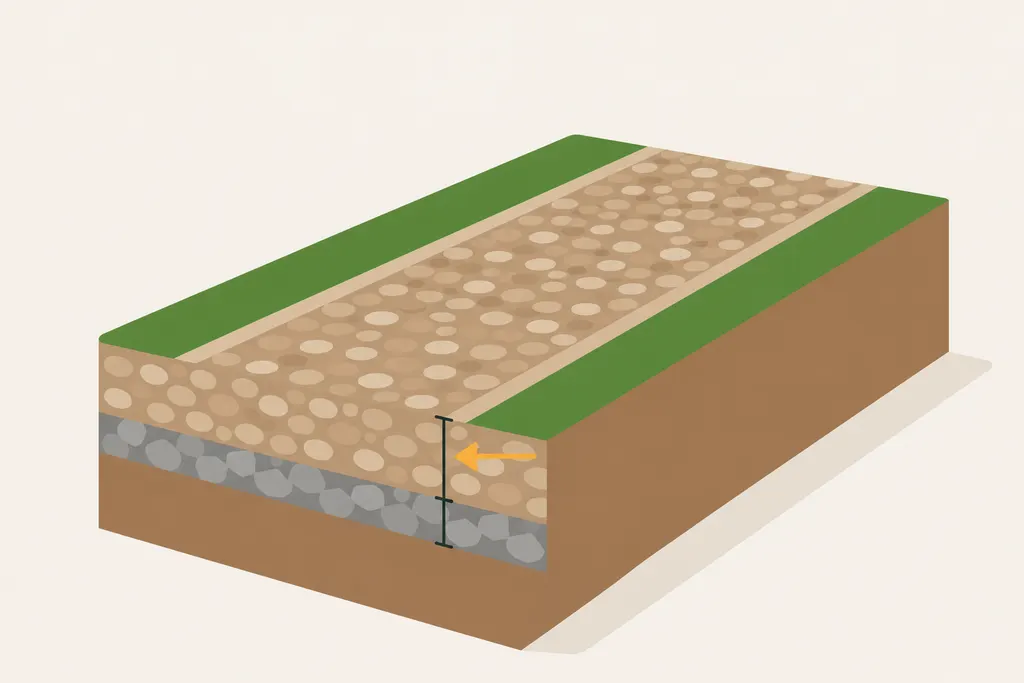
| Use | Pea gravel depth | Under it | Source |
|---|---|---|---|
| Walkway | 3 in | 2 in crushed rock, fabric | LawnStarter |
| Patio | 3 in | 2 in crushed rock, fabric | LawnStarter (same build) |
| Play area, falls up to 5 ft | 9 in kept in place; fill 12 in | — | CPSC |
LawnStarter applies the same layered build to patios. It lists furniture sinking into the stones as a drawback and mentions a honeycomb grid as an option for extra stability. Tamp the gravel level, then wet it with a hose to help it settle.
Bags vs bulk for pea gravel
Pea gravel bags are usually 0.5 cu ft; Quikrete sells its pea pebbles in that size, and one nursery lists a 0.5 cu ft bag at 50 lb. It takes 54 of them to make a cubic yard.
| Bag price source | Per 0.5 cu ft bag | Per cu yd (54 bags) |
|---|---|---|
| This Old House | $4–$6 | $216–$324 |
| HomeGuide (all gravel bags) | $2–$8 | $108–$432 |
| Patuxent Nursery (one store) | $7.49 | $404 |
Bags suit a short path, a few stepping-stone gaps or topping up an old walk.
Bulk pea gravel per cubic yard or ton, before delivery:
| Source | Per cu yd | Per ton |
|---|---|---|
| This Old House | $20–$70 | — |
| HomeGuide | $29–$86 | $28–$45 |
| LawnStarter | $25–$67 | $25–$53 |
The three sources agree on the low end but not the top: HomeGuide’s yard price reaches $86, about $16 above This Old House. Local quarries vary more than either range. Add delivery, which Today’s Homeowner puts at about $50–$150 per trip. To compare a per-ton quote with a per-yard one, use the converter on the gravel price per yard and ton page.
As a rough break point, a yard of bags at This Old House prices costs $216–$324. A yard of bulk at its $20–$70 range plus one $50–$150 delivery comes to $70–$220. Past about a yard, bulk usually costs less, and the gap grows with every extra yard on the same truck.
Do you need a base or edging under pea gravel
Pea stones are round, so they roll under foot. LawnStarter traces a shifting path to a missing base layer, and suggests stone dust as a fix, or a honeycomb grid for more support. The crushed-rock base has angular pieces that lock together; order it separately as gravel. For a firmer surface such as a paver walk, use the paver base calculator instead.
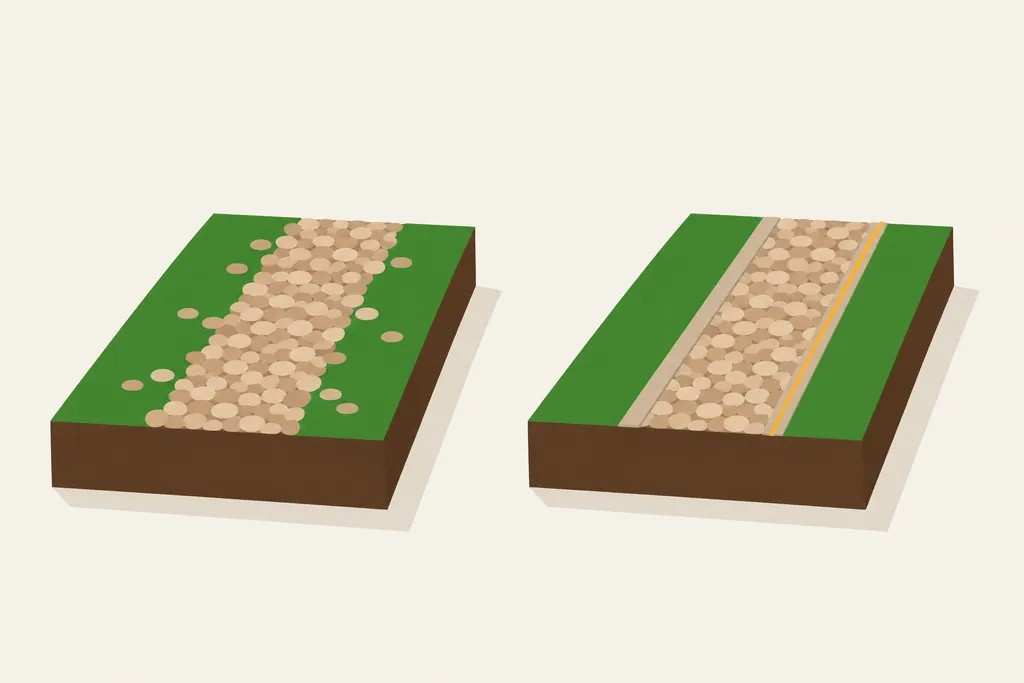
Edging is what keeps a pea gravel path a path. LawnStarter says the stone needs an edging barrier to stay contained. Without one, loose stones tend to wander into the lawn and beds. Common choices are steel or aluminum strips, plastic edging, brick or stone set on edge, or a paver border. Set the top of the edge a little above the finished gravel so stones do not wash over it.
Pea gravel weight and tons per yard
LA County Public Works lists stone or gravel at 2,632.5 lb per cubic yard, and New Mexico’s Mining and Minerals Division lists 1/4–2 in gravel at 1.42 tons (2,840 lb). The nursery bag above, 50 lb for 0.5 cu ft, works out to 2,700 lb a yard, right in that band. LawnStarter’s coverage figure points the same way: about 80 sq ft per ton at 3 in, or roughly 1.35 tons a yard.
That weight is the main thing to know before you haul it. The maximum payloads Ford lists for the 2026 F-150 run from 1,405 to 2,440 lb by engine and drive, so one full yard of pea gravel is over the limit of every version, before you count the driver. Enter the payload from your door-jamb label in the calculator to see how many partial loads you need, or have it delivered.
Common path sizes and how much they take
Pea gravel at 3 in, base at 2 in. Bags are 0.5 cu ft. Arithmetic only.
| Path or patio | Sq ft | Pea gravel (yd) | Bags | Base (yd) |
|---|---|---|---|---|
| 3 × 20 ft path | 60 | 0.56 | 30 | 0.37 |
| 3 × 30 ft path | 90 | 0.83 | 45 | 0.56 |
| 4 × 20 ft path | 80 | 0.74 | 40 | 0.49 |
| 4 × 40 ft path | 160 | 1.48 | 80 | 0.99 |
| 10 × 10 ft patio | 100 | 0.93 | 50 | 0.62 |
| 12 × 12 ft patio | 144 | 1.33 | 72 | 0.89 |
Path planning checklist
- Mark the path and measure length and width in feet
- Call 811 before digging the trench
- Dig about 6 in and lay landscape fabric
- Order crushed rock for a 2 in base and pea gravel for 3 in on top
- Choose and set edging before the gravel goes in
- Confirm whether the quote is by the ton or by the yard
- Check truck payload or book delivery
- Tamp, hose down and top up low spots after the first few weeks
FAQ
How many bags of pea gravel do I need?
Square feet × depth in inches ÷ 6 gives the number of 0.5 cu ft bags. A 4 × 20 ft path at 3 in is 80 × 3 ÷ 6 = 40 bags.
How much does a yard of pea gravel cover?
108 sq ft at 3 in, 162 at 2 in and 324 at 1 in. LawnStarter’s rule of about 80 sq ft per ton at 3 in matches once you allow for the weight of a yard.
Is pea gravel good for a patio?
It works for a casual seating area. LawnStarter warns that furniture can sink into loose stone; it mentions a honeycomb grid for extra stability and patios that mix gravel with pavers or flagstone.
Is pea gravel safe under a swing set?
The CPSC rates 9 in of pea gravel as protective for falls up to 5 ft, less than wood chips or rubber. Start with 12 in, since loose fill compresses, and check the equipment maker’s guidance.
Do I need landscape fabric under pea gravel?
LawnStarter’s method puts fabric at the bottom of the trench, under the crushed-rock base, to keep soil and stone apart.
How often does a pea gravel path need topping up?
LawnStarter suggests a refill about every four years. Measure the depth in a few spots and run only the shortfall through the calculator.
Some drawings on LandscapeFill were made with an AI image tool. They are simplified sketches of yards and materials, not photos of real projects, products, places or people.
Sources 10
Checked and updated November 25, 2026