Square feet times depth gives the volume. A 10 × 10 ft bed at 3 in holds 25 cu ft, which is 0.93 cubic yards or 50 bags of 0.5 cu ft. Loose rock runs from 2,570 lb per cubic yard (LA County Public Works) to 1.42 short tons for gravel (New Mexico EMNRD). So that bed takes roughly 2,380 to 2,630 lb of river rock. Lava rock is the exception: New Mexico lists scoria and cinders at just 0.475 tons per yard.
The calculator above does the same math for any mix of rectangles, circles and triangles. Switch it to landscape rock for crushed decorative stone.
How much river rock you need: depth and coverage
One cubic yard is 27 cu ft. Spread 1 in thick, it covers 324 sq ft. Every extra inch of depth cuts that coverage. The table is plain arithmetic, so it holds for any stone.
| Depth (in) | Sq ft per cubic yard | 0.5 cu ft bags per 100 sq ft | Cubic yards per 100 sq ft |
|---|---|---|---|
| 2 | 162 | 34 | 0.62 |
| 3 | 108 | 50 | 0.93 |
| 4 | 81 | 67 | 1.23 |
| 6 | 54 | 100 | 1.85 |
Pick the depth by eye rather than by rule. Small pebbles hide fabric at a thinner layer. Fist-size stones leave gaps unless the layer is deeper. The calculator starts at 3 in because that is the depth This Old House uses for its per-ton coverage figures below.
Dry creek beds
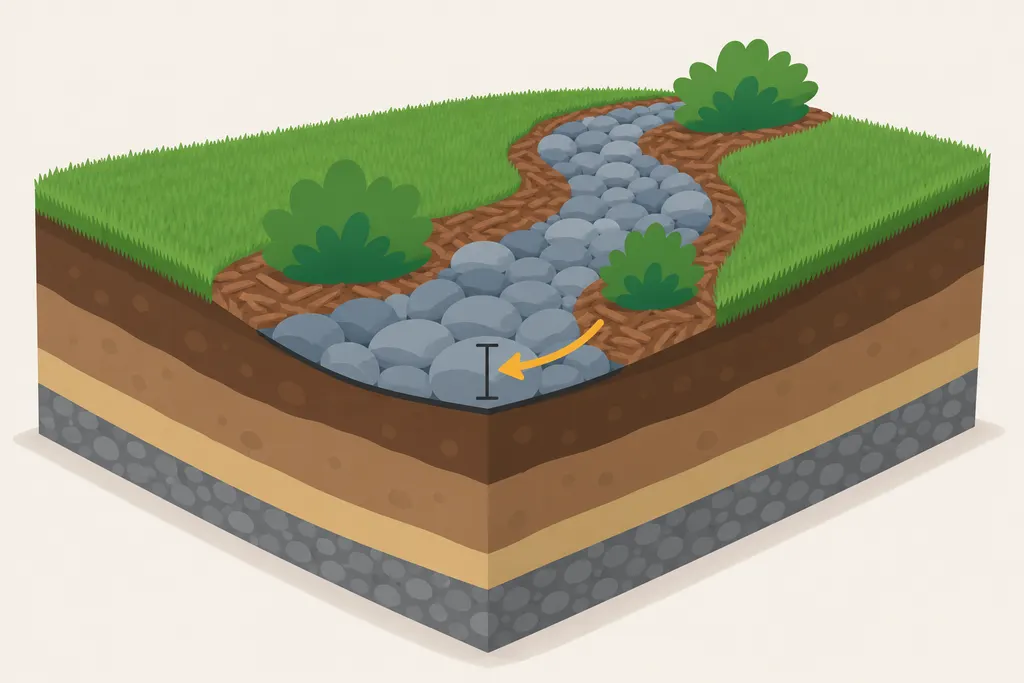
A dry creek is a shallow channel, so measure the stone surface, not the flat footprint. Run a tape along the center line for length. For width, lay the tape across the dip from edge to edge, following the slope. That width is wider than the gap between the banks, and it is the one the rock has to cover.
Creek beds also mix sizes: cobbles along the banks, smaller rock in the bottom, a few boulders. Enter each zone as its own area. Use the extra percent box for any allowance you want on top. The dry creek example chip above uses 10%, which is your call, not a rule.
River rock vs landscape rock vs lava rock
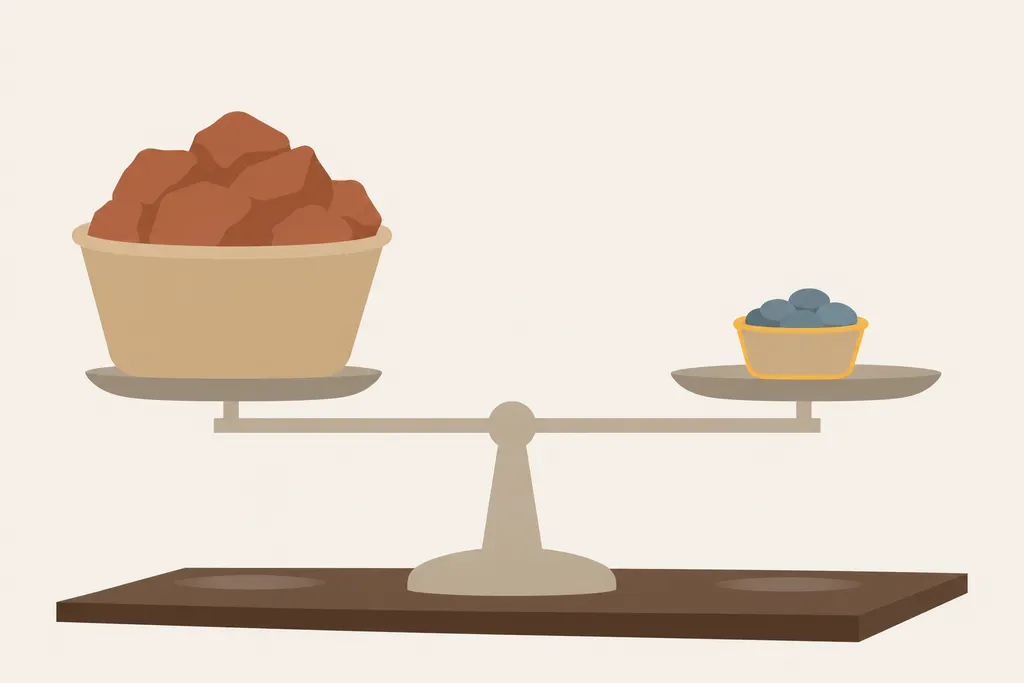
“River rock” means stone smoothed by water. “Landscape rock” is a store term for any decorative stone, often crushed and angular. Both weigh about the same per yard. Lava rock does not. It is full of air pockets, so a yard of it weighs far less.
| Rock | Tons per cubic yard | Lb per cubic yard | Sq ft per ton at 3 in | Source |
|---|---|---|---|---|
| Rock, loose | 1.29 | 2,570 | 84 | LA County |
| Stone or gravel | 1.32 | 2,633 | 82 | LA County |
| Gravel, 1/4–2 in | 1.42 | 2,840 | 76 | New Mexico |
| Scoria and cinders (lava rock) | 0.475 | 950 | 227 | New Mexico |
The last column divides 108 sq ft (one yard at 3 in) by the tons per yard. The landscape rock setting in the calculator uses the crushed and loose stone weights. If you are buying lava rock, the cubic yards and bag counts it shows still apply. For weight, take a little over a third of the tons it shows.
Coverage per ton at common depths
Yards often sell rock by the ton. This Old House gives coverage per ton at 3 in deep. The 2 in and 4 in columns scale its figures by depth.
| Rock (This Old House) | Sq ft per ton at 3 in | At 2 in | At 4 in |
|---|---|---|---|
| Crushed rock | 65–75 | 98–113 | 49–56 |
| Landscape rock, 0.75–1.5 in | 75–85 | 113–128 | 56–64 |
| Landscape rock, 1.5–3 in | 45–60 | 68–90 | 34–45 |
| Lava rock | 200–210 | 300–315 | 150–158 |
These figures and the weight table do not fully agree. For larger stone, This Old House’s 45–60 sq ft per ton is well below the 76–84 that the county weights suggest. Big stones leave voids and sit unevenly, so more tonnage goes into the same area. If you buy by the ton, ordering from the smaller number keeps you from running short.
Price per ton, per yard and per bag
Prices vary by region and stone type. The two price guides below differ a lot on river rock per ton, so treat any one range as a starting point for a phone call. Delivery fees and other stone types are on the gravel cost per yard and ton page.
| Rock | Source | Per cubic yard | Per ton | Per bag |
|---|---|---|---|---|
| River rock | This Old House | $40–$80 | $80–$150 | $5–$17 |
| River rock | HomeGuide | $47–$70 | $33–$49 | — |
| Landscape rock | This Old House | $45–$130 | $50–$125 | — |
| Lava rock | This Old House | $75–$165 | $115–$220 | $5–$22 |
| Lava rock | HomeGuide | $96–$140 | $76–$85 | — |
| Crushed limestone | This Old House | $30–$45 | $20–$30 | $3–$19 |
This Old House notes that named river rock types cost far more: its table lists $160 to $210 per ton for three of them. Its text says some river rock runs as high as $850 per ton. Lava rock looks costly per ton, but each ton covers two and a half to three times the area. Compare it per yard instead.
Bags of river pebbles come in 0.5 cu ft sizes (Quikrete), which means 54 bags per yard.
A 300 sq ft border at 3 in needs 75 cu ft, or 150 bags. At $5–$17 a bag (This Old House), that is $750 to $2,550. Bags make sense for a small ring around a tree or a few patches. You can mix colors and haul them in a car trunk a few at a time.
The same 300 sq ft border is 2.78 cubic yards. At $40–$80 a yard (This Old House), the rock costs about $111 to $222. Delivery adds $50 to $150 per trip, per Today’s Homeowner. Today’s Homeowner’s rule of thumb is about 1 yard of stone per full-size pickup, but that is bed space, not weight. A yard of river rock weighs 2,570 lb or more, and the maximum payloads Ford lists for the F-150 run from 1,405 to 2,440 lb (Ford). A full yard is over every one of them, so haul part loads sized to your door-jamb payload, or pay for delivery.
Weed fabric and edging before the rock goes down
This Old House suggests landscape fabric as a barrier before rock goes in. We found no sourced price for fabric, so it is not in the totals above. Buy enough to cover the whole bed, plus extra for overlapping seams. In a creek bed, the fabric must run up both banks.
Edging keeps rock from creeping into the lawn. Measure it as the outline of the bed, in feet. For a circle, that is 3.14 times the distance across.
- Sketch each bed and split odd shapes into rectangles, circles and triangles
- Measure length and width in feet; for a creek, measure across the dip
- Choose a depth and run the calculator
- Ask the yard if it sells by the ton or the yard, and what this rock weighs per yard
- Ask about the delivery charge and any minimum load
- Check your truck’s payload before picking up stone yourself
- Buy fabric and edging for the full bed outline
- Call 811 before digging out the bed or a creek channel
Questions people ask
How many square feet does a ton of river rock cover?
At 3 in deep, This Old House puts crushed rock at 65–75 sq ft per ton and larger landscape rock at 45–60. The LA County and New Mexico weights work out to about 76–84 sq ft per ton. Bigger stones land at the low end of those ranges.
How many bags of river rock make a yard?
A cubic yard is 27 cu ft, so it takes 54 bags of 0.5 cu ft. That bag size is the one Quikrete uses for its river pebbles.
How much does a yard of river rock weigh?
LA County lists loose rock at 2,570 lb per cubic yard. New Mexico lists gravel at 1.42 tons, which is 2,840 lb. Wet stone and denser types can be heavier, so ask the yard for its own figure.
Is lava rock more expensive than river rock?
Per yard, usually: HomeGuide lists $96–$140 for lava rock against $47–$70 for river rock, and This Old House $75–$165 against $40–$80. Per ton the gap looks even wider, but a ton of lava rock covers 200–210 sq ft at 3 in (This Old House). That is two and a half to three times what a ton of crushed or river rock covers.
Should I buy landscape rock by the ton or by the yard?
Buy it the way the yard prices it, and convert with the weight tables above. If the rock is sold by the ton, use the calculator’s ton figure. Then check it against This Old House’s coverage per ton for that stone size.
Do I need fabric under river rock?
This Old House recommends a fabric barrier before rock goes down. The fabric keeps a layer between the stone and the soil. Seeds that blow in on top can still sprout in the gaps.
Some drawings on LandscapeFill were made with an AI image tool. They are simplified sketches of yards and materials, not photos of real projects, products, places or people.
Sources 7
Checked and updated November 25, 2026